
Published · By Jeff Brick, 2026 SDMLS President
Quick answer: For a same sex couple buying a house California treats married spouses and registered domestic partners alike under state law, so the biggest early decision is how the two of you take title. Spouses can ask to hold the home as community property with right of survivorship, and your escrow officer or attorney confirms what fits your situation. As a gay realtor in San Diego, I walk couples through these questions every month, and this guide covers the basics so you arrive at escrow prepared.
This is general information, not legal, tax or lending advice. Ask a California real estate or estate planning attorney about your own situation. Sources current as of November 19, 2026.
Same Sex Couple Buying a House California: Your Title Options
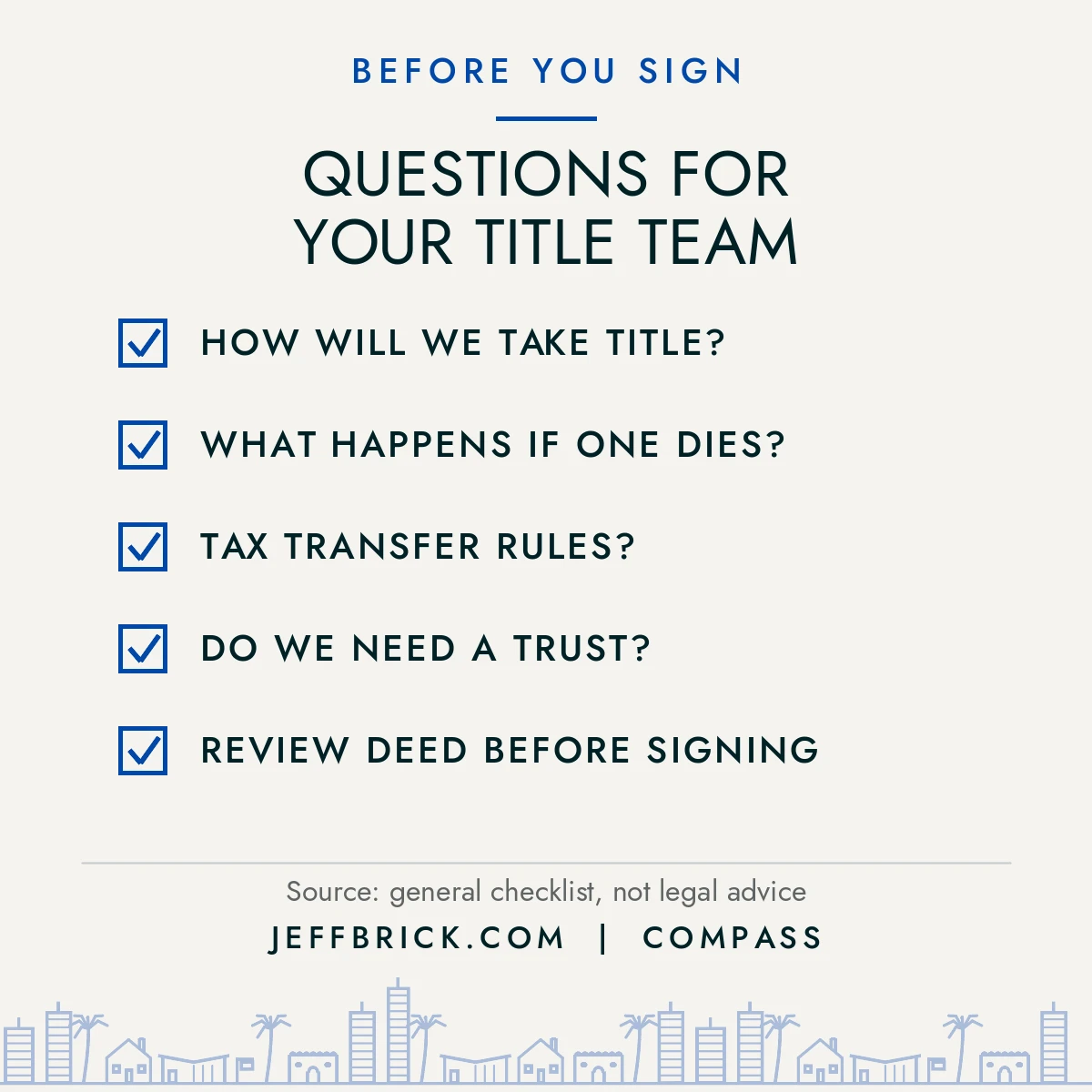
“Taking title” simply means how the deed lists the owners. It affects what happens if one of you dies, how a future sale works, and how the home is treated in a divorce or dissolution. Common choices people discuss with their escrow team include joint tenancy, tenancy in common, community property, and community property with right of survivorship. A living trust is another route, which we get to below.
The one that surprises couples most is community property with right of survivorship. Under California Civil Code section 682.1, spouses can hold property this way if the transfer document expressly declares it. On one spouse’s death, the property passes to the survivor without administration, using the same procedures as joint tenancy. The key phrase is “expressly declared,” which means it must be written into the deed. It is not automatic, so read the deed before you sign it.
Spouses and registered domestic partners
California gave registered domestic partners the same rights, protections and benefits as spouses in Family Code section 297.5. The Secretary of State’s Domestic Partners Registry FAQ says registered partners generally have the same rights as spouses under California law. It also notes that the federal government does not always treat them the same way, and that you must register with the Secretary of State to receive state rights. If you are registered rather than married, tell your escrow officer and attorney up front so the paperwork reflects it.
What about unmarried partners?
Couples who are neither married nor registered have different options, and the community property choices above are not designed for them. This is a good moment to sit down with an attorney, because the title you pick can matter a great deal later.
Property Tax and Transfers Between Partners
California reassesses property when ownership changes, so people often ask whether adding a partner to title triggers a new tax bill. The State Board of Equalization’s Rule 462.220 says a change in ownership does not include an interspousal transfer or a transfer between registered domestic partners. It also covers transfers that take effect on the death of a spouse or registered domestic partner. The rule has details and conditions, so confirm how it applies to your deed with your attorney or the county assessor. If you are also thinking about moving a tax base from another home, my guide to Prop 19 in California covers that separate topic.
Estate Planning and Your Home
Title is one piece of a bigger plan. Many couples also talk with an attorney about a living trust, powers of attorney and healthcare directives, especially if one partner has family who might not see things the same way. Buying a home is a natural time to ask, since the deed and the plan should match. I will go deeper on trusts in a later post in this series.
Your Lending and Fair Housing Rights
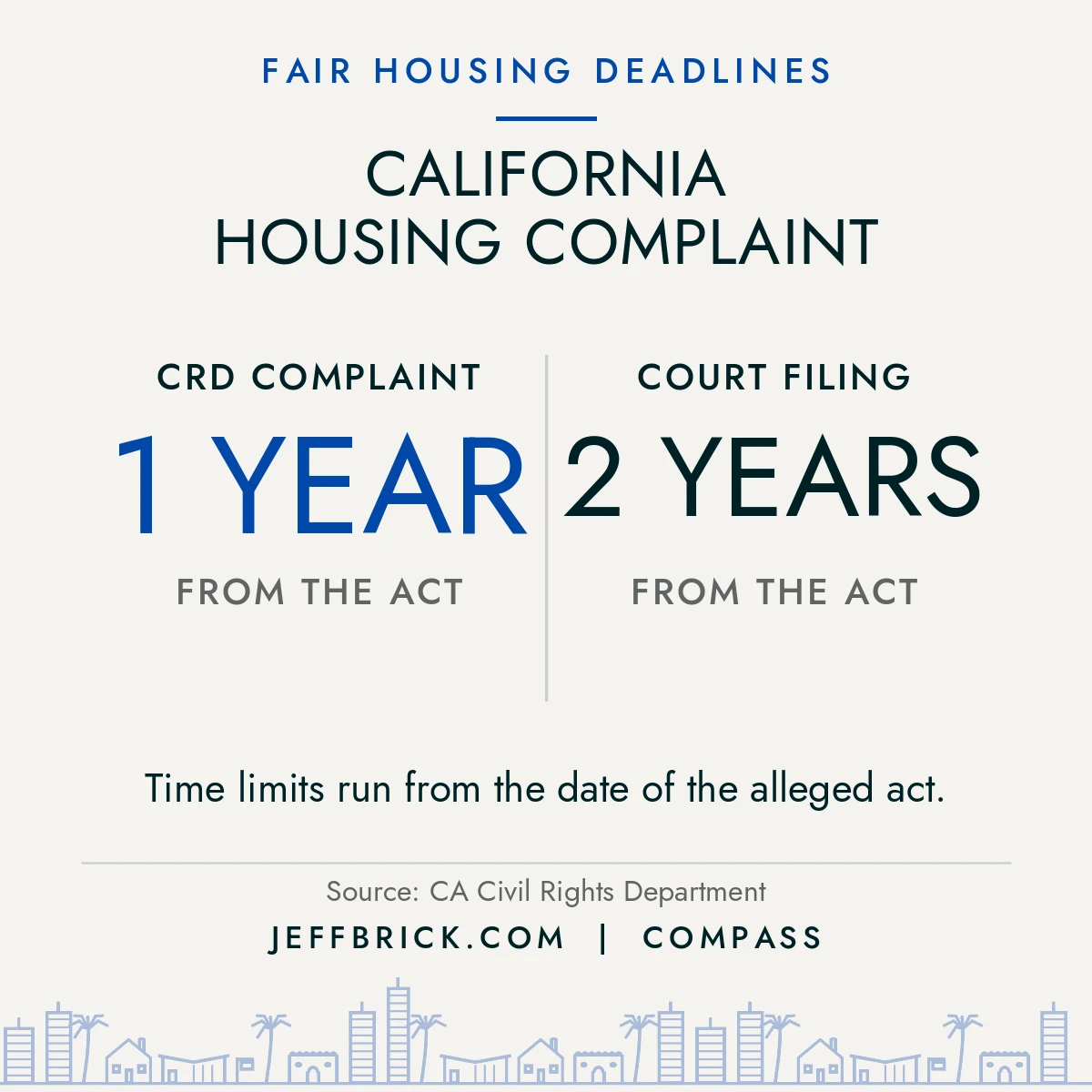
Two sets of rules protect you while you shop and borrow. For housing, the California Civil Rights Department’s housing page lists sexual orientation, gender identity, gender expression and marital status among the protected characteristics. Its FAQ says a housing discrimination complaint generally must be filed within one year of the alleged act, and the time limit for filing in court is two years.
For lending, the FTC’s mortgage discrimination guide explains that the Equal Credit Opportunity Act bars creditors from discriminating based on marital status, and says a creditor may not discount your income because of your sex or marital status. It also says creditors must not consider your sexual orientation or gender identity when reviewing a mortgage application. If something feels off, you can ask questions, compare lenders, and report concerns through the agencies those pages describe. My approved vendors list includes lenders, title and escrow professionals, and attorneys I have worked with.
Jeff’s Take
My husband Aaron and I have lived the “who goes on the deed” conversation ourselves, along with our dogs Trinity and Aspen and four cats. The advice I give clients is simple: decide how you want to hold title before you write an offer, not at the closing table, and ask your title team to explain each option in plain English. Then read the vesting line on the deed every time. A quiet detail there can change what happens down the road.
One more thing. I show every client every neighborhood in their budget, and I never steer anyone toward or away from an area. Your search is about your priorities: commute, budget, space, and the home itself. For help with the rest of the process, see my San Diego home buying timeline, my post on how to find a gay or LGBTQ+ realtor and what to ask, and my local’s guide to LGBTQ+ friendly San Diego neighborhoods, which describes places and community resources. You can also browse every San Diego neighborhood guide.
“Finding another gay man who shares the same values and work ethic made the entire search in Bay Ho feel comfortable and collaborative.”
Michael Estrada, Bay Ho
Ready to Talk? Call or Text Jeff
If you are planning to buy, call or text me at 858-324-4448 or book a time here. If you are looking for an LGBTQ+ realtor in San Diego, you can learn more about how I work on my gay realtor in San Diego page. Million Dollar Service at All Price Points. Jeff Brick, Compass, DRE# 02156850.
FAQ: Same Sex Couples Buying a Home in California
Can both of us be on the deed and the loan?
Yes, couples commonly list both names on the deed and apply together on the loan. Title and loan are separate decisions, so ask your lender and your escrow officer how each will be set up.
What is community property with right of survivorship?
It is a way spouses can hold title under Civil Code section 682.1. The deed must expressly declare it, and on one spouse’s death the property passes to the survivor without administration, like joint tenancy.
Do registered domestic partners have the same rights as spouses in California?
Under state law, registered domestic partners generally have the same rights, protections and benefits as spouses, according to the Secretary of State. Federal treatment can differ, so ask an attorney about your situation.
Does adding my partner to the deed raise my property taxes?
BOE Rule 462.220 says transfers between spouses or registered domestic partners are not a change in ownership. Conditions apply, so confirm with an attorney or the county assessor before you record anything.
Where do I report housing discrimination in California?
The California Civil Rights Department handles housing complaints, and its site lists a complaint process. Complaints generally must be filed within one year of the alleged act.