Published · By Jeff Brick, 2026 SDMLS President
Quick answer: Buying a historic home San Diego buyers fall in love with comes down to three checks before you write an offer: whether the house is formally designated, what the City’s 45-year permit review means for the work you want to do, and what a specialist inspection finds behind the plaster. Designation is not a deal-breaker, and it can even unlock the Mills Act property tax program, but it does change how you renovate.
I love a 1920s Craftsman or a Spanish Revival with original tile as much as any buyer, and I have walked plenty of clients through the surprises that come with them. This guide covers the rules that matter, with every figure linked to the City or State source so you can check it yourself. It is general information, not legal, tax or financial advice, so confirm details with the City and your own professionals.
What Makes a San Diego Home “Historic”?
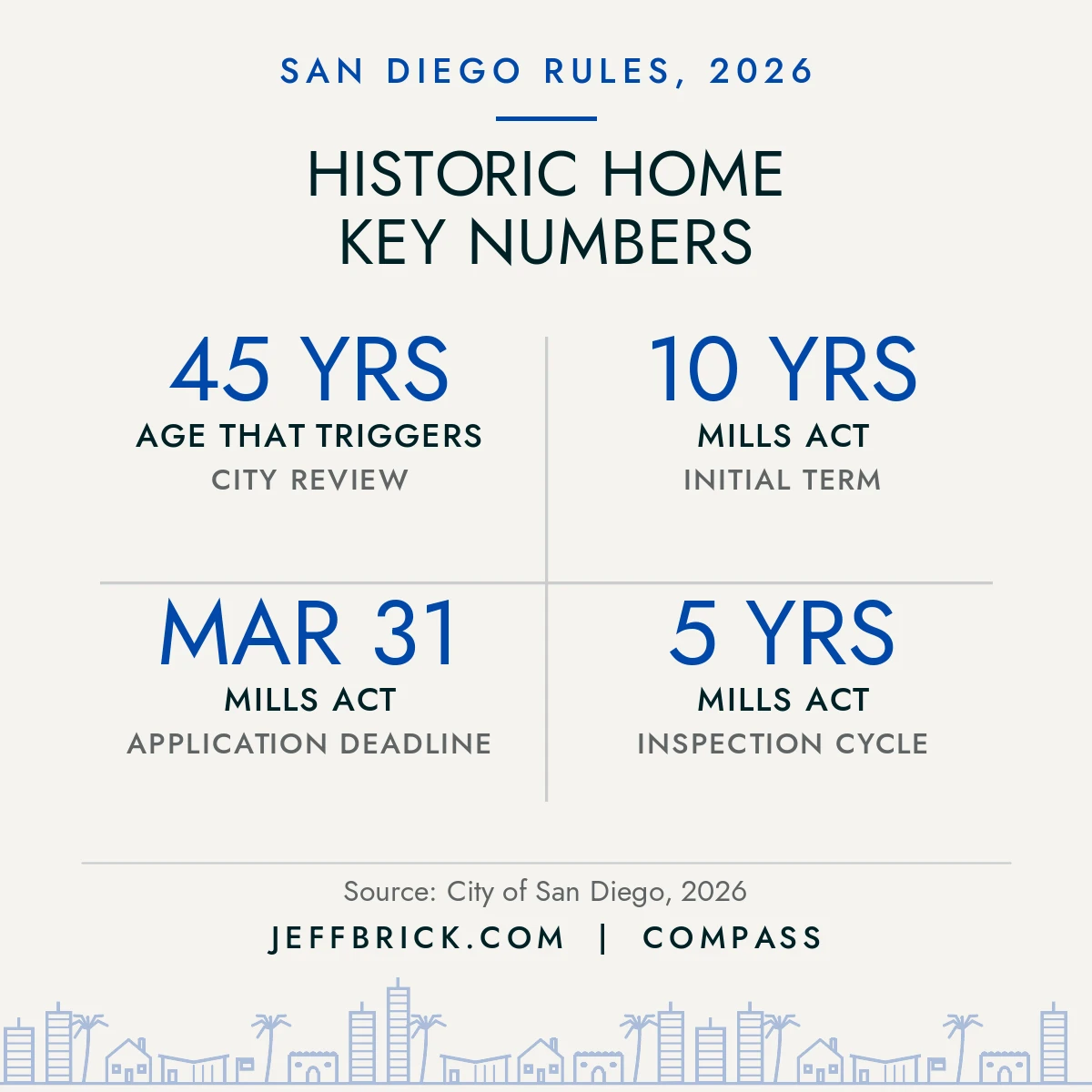
There are two different ideas hiding in that word. The first is age. The City’s Municipal Code requires a historical screening for sites with buildings that are 45 years old or older whenever a project needs a permit. An old house is not automatically historic, but it is automatically looked at.
The second is designation. A home can be designated individually through the City’s Historical Resources Board, or it can sit inside a historic district. According to the City’s district designation fact sheet, contributing properties must follow the U.S. Secretary of the Interior’s Standards for improvements and repairs, while non-contributing properties may be approved for substantial alteration, and owners cannot opt out of a district. That fact sheet is dated 2017, so ask City staff whether any detail has changed.
Where the Historic Homes Are
Historic character shows up all over the city, and each pocket has its own flavor. Spanish Revival and Craftsman homes run through Talmadge, Kensington and Mission Hills. Bungalow blocks are common in North Park, South Park and University Heights. Older Victorians and early-century homes appear in Golden Hill, and Burlingame is known for its early-1900s architecture. You can browse all of my neighborhood guides on the neighborhoods hub.
Being in one of these neighborhoods does not mean a specific house is designated. That is a parcel-by-parcel question, which is why the first step in buying a historic home San Diego sellers list is checking the address.
Step 1: Check Designation Before You Fall in Love
Start with the City’s historical resources inventory database, which includes designated resources and those identified in community plan surveys. The City does not present it as a complete answer, so follow up with the Historical Resources staff in Development Services at 619-235-5224 before you rely on a result. Ask your agent to put the designation question in writing with the seller, too. Sellers often know whether the home is designated or has a Mills Act contract, and that status transfers with the property.
Step 2: Understand the 45-Year Permit Review
Under San Diego Municipal Code Section 143.0212, permit applications that affect properties 45 years old or older are reviewed. City staff look at photos and building and water permit records to decide whether a site-specific historical study is needed. If staff think the property may be significant, the study can go to the Historical Resources Board for designation consideration.
For you as a buyer, that means a kitchen remodel, a second-story addition or a demolition plan can take a different path than the same project on a newer house. The City says a project on a designated site that meets the Secretary of the Interior’s Standards and avoids substantial alterations can obtain an exemption from the Site Development Permit. A project that does not meet them may need a more involved Process 4 Site Development Permit. The City’s page does not give fee or timeline figures, so ask staff about your plans before closing, not after. You can also watch the City’s list of current over-45 reviews to see how the process works in practice.
Step 3: Know the State Building Code Flexibility
Old houses often cannot meet every line of the modern code without losing what makes them special. California’s State Historical Building Code provides alternative building regulations for qualified historic structures, allowing reasonable alternatives where historic features are threatened by regular code requirements, while still addressing safety, energy conservation and disability access. Qualifying status can come from the National Register, the California Register or a city or county inventory. Your contractor or architect should know how to use it, and if they do not, keep looking.
Step 4: Run the Mills Act Numbers
The Mills Act is the big financial upside. In San Diego, local historical designation is required before you can enter an agreement, the initial term is ten years, and it renews automatically each year. Contracts transfer to new owners when the property sells, according to the California Office of Historic Preservation. The City’s fact sheet says applications are due by March 31 to be considered that year, the property must have been designated before December 31 of the prior year, and the City reviews compliance on a five-year basis. It cites an average savings of 50 percent, within a range of 25 to 75 percent, though the City’s web page cites a range of 20 to 70 percent. Savings depend on the County Assessor’s valuation of your home, so treat any number as an estimate.
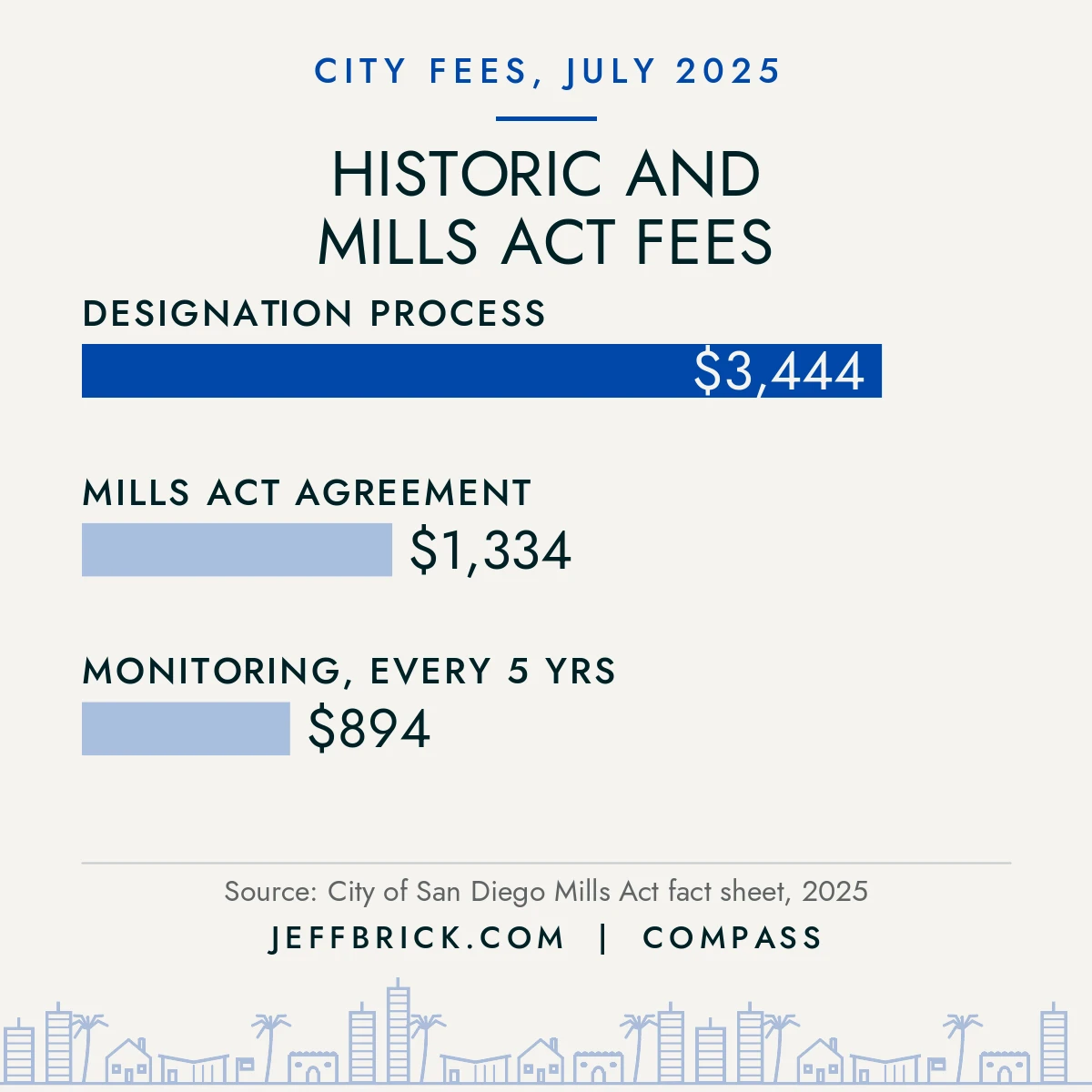
The same fact sheet lists fees updated July 1, 2025: $3,444.36 for the designation process, $1,334.24 for the Mills Act agreement, and $893.67 for monitoring with the initial agreement and every five years after. You also commit to a 10-year maintenance and rehabilitation plan at application. My full breakdown is in The Mills Act in San Diego. Ask a CPA or tax professional how it fits your situation.
Step 5: Order the Right Inspections
A standard inspection is the floor, not the ceiling, when you are buying a historic home San Diego has had standing for a century. I ask clients to consider a sewer line camera inspection, a look at the electrical panel and any remaining old wiring, a check of the plumbing material, a foundation and drainage review, and a termite and dry rot report. Bring the inspectors to the property early and ask what the likely repair costs are, since an old home’s surprises are usually hidden in walls and crawlspaces. If you need people to call, my Approved Vendors list has trusted home pros, and your lender and insurer should hear about the home’s age before you are deep into escrow.

Jeff’s Take
I tell buyers the same thing every time: the rules are manageable, and the surprises are not. Designation and the 45-year review are paperwork you can plan around. A failing sewer lateral or a panel from the 1950s is what blows up a budget. Love the house, then verify the address, the permit history and the bones, in that order. If you are also thinking about how an older home fits your monthly budget, my guide on how much house you can afford in San Diego walks through the numbers.
Ready to Tour Historic Homes?
Call or text me at 858-324-4448. I am a San Diego REALTOR® at Compass (DRE# 02156850), the 2026 President of the San Diego Multiple Listing Service, a member of the Board of Directors of the San Diego Association of REALTORS®, and a Southern California luxury apartment home leasing broker. Every buyer deserves a million-dollar experience at every price point, and everyone is welcome home, including the 1925 bungalow with the quirky closet. 🏳️🌈
Historic Home FAQ
Is every old house in San Diego considered historic?
No. A home that is 45 years old or older is screened when a permit is requested, but that review decides whether a study is needed, not whether the home is historic. Designation is a separate formal step through the Historical Resources Board.
Can I remodel a designated historic home?
Yes, but improvements need to follow the Secretary of the Interior’s Standards for contributing and designated properties, per the City. Talk to Development Services staff about your plan before you buy.
Does the Mills Act transfer when I buy?
According to the California Office of Historic Preservation, Mills Act contracts transfer to new owners when the property is sold, and they renew automatically each year. Confirm the contract terms and the inspection history with the City.
How do I find out if a San Diego home is designated?
Search the City’s historical resources inventory by address, then confirm with Historical Resources staff at 619-235-5224, since the database is not presented as complete.
Will a historic home cost more to insure or maintain?
It can, because of age-related systems and specialty materials, but it varies by home. Ask your insurer for a quote before you remove contingencies and get repair estimates from your inspections.